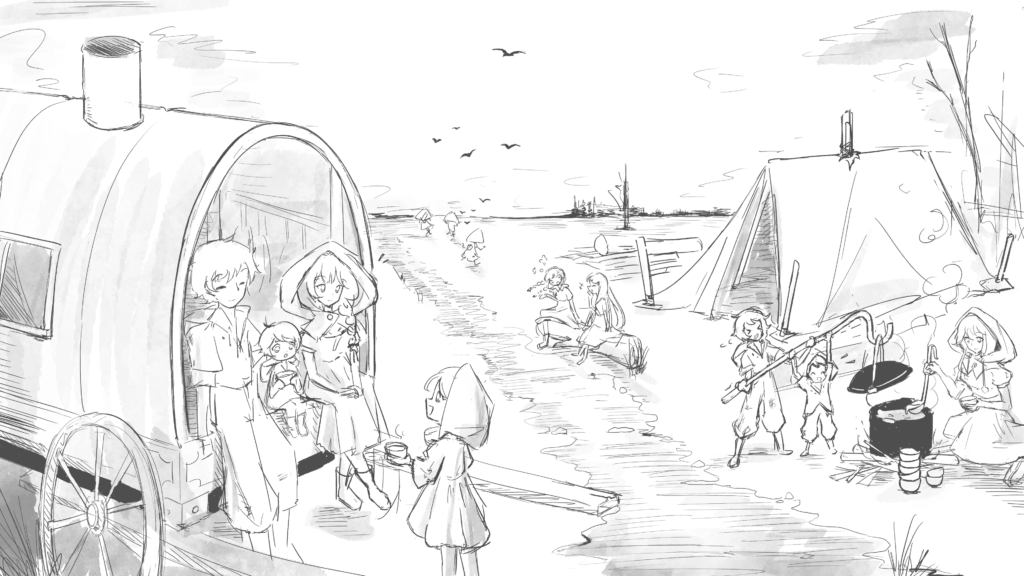
The Featureless was originally mentioned in the first blog post, and I had promised a deeper dive, so that would be our purpose today. I will also touch on some of the design philosophies behind the Featureless and, to a certain extent, other cultures/races in the setting as a whole.
The Featureless
As described in the first dev blog, the Featureless is a general term used to refer to people without any distinctive features. Rather than talking about a specific group, it’s a loose collective of people who share vague cultural habits, but are grouped together due to their distinctive appearance. For as long as the world could remember, there had been Featureless wandering the continent. For longer still, they were persecuted by many, and the moniker “Featureless” has not been a positive one, with pejorative terms such as “blanks” being used to describe them. While unfortunate, it is not difficult to imagine a group of people who have no unified culture, homeland, or community to be discriminated against. The Featureless often travel from settlement to settlement, doing odd jobs and purchasing necessary supplies before moving on, with only a minority ever “converting” into settled life, with Natalija’s parents being one such example. They are often unwelcome, and most would not stay long in a single place even if they wanted to.
However, the Featureless has an odd reputation of being attuned to “relics”, the same items the Church is interested in. Be it a stereotype or a genuine innate talent, the Featureless are capable of utilizing relics at a better capacity than other humans of the continent. While one would imagine this would mean the Church would be interested in the Featureless for their skills, the Church holds no interest in using the relics themselves, so said talent is irrelevant at best, and bordering on heresy at worst. As a result, their skill is of no interest to most people, and when they are, it’s often by those seeking to go against the teachings of the Church. Therefore, the Featureless are often associated with such unpleasantness, further deteriorating their reputation as a whole.
That being said, the Church itself holds no real opinion of the featureless, as they are ultimately an organization that is still largely captured by the recovery of said relics. That is to say, the Church sees everything other than the securement of relics as merely a means to an end. Certainly, the Church is an organization that would break into your home and seize your grandfather’s cane if it so possesses a trace of “holiness”, but they wouldn’t bat an eye over vague rumors of the Featureless and their attunement to relics. The aforementioned “unpleasantness” is merely the result of existing prejudices that get wrapped up by other facets of society, rather than an active institutionalized push.
To speak of the Featureless is to speak of never-ending sorrow and disappointment. Which other people possess not even a name for themselves? Long and far they have wandered, so that by this point, nobody remembers their home and origin. The slaves of Tor, an unfortunate group who, much like the Featureless, are discriminated against, yet they still dream of their home. Their dearest wish is to return to the land they call home one day, as implausible as it seems.
What of the Featureless? They cannot fathom a hope that unifies them as a people. That is perhaps what makes their people tragic in the eyes of others. Humans aspire. The Kallipolis people dream of a utopia. The Singidunum people dream of an empire. Even slaves dream of freedom, exiles dream of their homeland. The Featureless? They do not dream. They live, they endure, but they do not dream.
As depressing as their tale is, make no mistake, the Featureless are not helpless in their existence. After all, which other people have existed for as long as they have? Nations rise and fall, entire cultures torn asunder, yet the Featureless have lived past it all. If one were to ask an optimistic Featureless, they would not see their lack of unity as a curse. To them, to share no dream is to be born with no chains. To have no land to return to is to be free from the weight of despots and tyrants. Many Featureless do genuinely believe the so-called tragedies others project onto them are the very reason their people have endured for this long.
What do you think? Do you empathize with the Featureless, or feel pity for them?
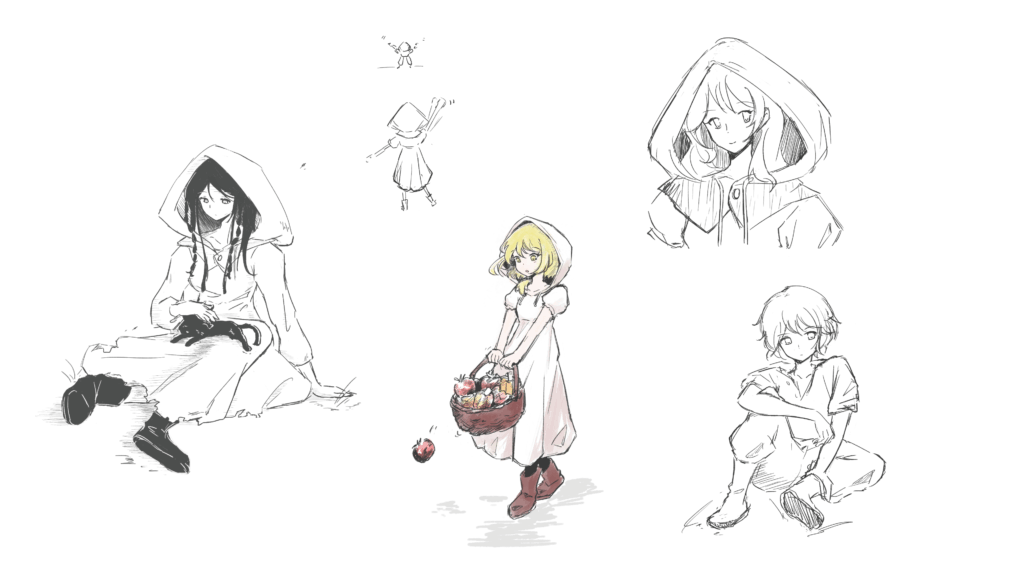
Design Philosophies: Humanness
One of the reasons why this blog took so long (among other reasons) was that I struggled to put into words the importance of the Featureless. Not as a device within a story, but its significance of how I approach my storytelling and worldbuilding. From time to time, I’ve been asked how I write stories, or what process I engage in when it comes to storytelling, or similar lines of questioning. From my perspective, one of the most important concepts to grasp, beyond technical ability or effort, is the simple notion of “what you wish to convey”.
This sounds simple in principle; after all, most of us do have something to say. However, what I want to stress is the nature of getting the message across. Simply shouting your message into the void with nobody to understand it is, at the risk of being blunt, an incredibly self-indulgent exercise. That is to say, merely having something you want to say isn’t good enough. What is important is having your audience comprehend, or at least feel the existence of your message.
That begs the question, how do we achieve that? To be frank, I don’t have a concrete answer for that, because if I did, I wouldn’t be here writing this blog. After all, it is a question that most artists and creators grapple with, be it consciously or subconsciously. However, it is my belief and therefore my philosophy when it comes to writing that the “appeal to humanness” is of crucial importance.
How do we convey works to people across cultures and even time? How are we able to spread our message to those who do not speak our languages nor share our cultures? That aforementioned humanness is the key. I believe there is some quality that appeals to how we experience being human, regardless of where or when we come from. I strive to avoid “barriers of entry” in my works, which typically range from things like preexisting knowledge to context-specific themes. We are all human, after all. No matter where we come from, we all share something in common that grants us the potential to understand each other. The tricky part is to identify that shared value and express it in a relatable way.
The Featureless is the example I chose to represent this exploration of “humanness”. I don’t wish to fully analyze my work before it’s fully released as a game, but generally speaking, the Featureless represent certain aspects of humanity. My hope is that, regardless of where one came from, they would be able to comprehend the nature of the Featureless. My wish is that, no matter who you are, you can appreciate the Featureless as part of the worldbuilding for the very humanness they represent.
Personally, it was challenging thinking about the Featureless in the context of the world they inhabit. Unlike the other races and cultures that inhabit the world, the Featureless were not meant to represent a group or an ideal. They are “featureless”, after all. Who they aren’t holds more meaning than who they are.
Once again, any feedback, questions, or comments are welcome. It’s been a pleasure to read them all.
Until next time.