
Welcome to the dev blogs, and I will be your jailor during our time here. Due to the nature of these blogs, there will be walls upon walls of text and much of it will be not only a journaling of various characters, worldbuilding, and game systems, but also my design philosophy behind each of them, among other things related to this project. As such, each dev blog might potentially be excessively long, such as this one. Or in modern English, there will be yapping—a lot of it.
These dev blogs might not contain too much of the “mechanical” parts of making a game as of now, considering it’s mostly about world-building and designing characters. As such, don’t expect discussions of game systems for now. This first dev blog will be separated into sections, so one can skip to the next section if they are interested/not interested in any given topic. In order, the topics discussed in this blog will be design philosophy, followed by the background and personality of the character Natalija.
Design Philosophy
To begin, I think I have to discuss my personal design philosophy. For today’s purpose, it will mainly have to do with one specific point that has to do with Natalija, but I will gradually build upon it across dev blogs. I assume most of the readers here have likely watched Riifushi’s video, so I would first make a few comments on her visual design before discussing her background in depth.
As Riifushi mentioned, Natalija is merely a merchant who has no moral qualms with what she sells. With her connections, she isn’t just a “middleman” merchant who buys and sells in one place to another, she has the ambition to produce goods of her own, therefore involves a lot of personal prototyping and testing. That translates to a design of her outfit and equipment being quite inefficient and unsatisfactory at times.
What do I mean by this? The future is unknowable to the inventor, and that presents a unique conundrum when developing a world that is unlike ours. We know what something should be because we know history. We have scholars and users to tell us how a specific product turned out, but the inventors themselves are merely attempting to solve a problem, but that in and of itself may lead to other problems that would eventually cause the product to either fail or be improved upon by another round of “problem-solving”. We know what a product is supposed to look like, but for someone like Natalija who is inventing something for the very first time, wouldn’t it make more sense for her designs to be representative of the problems she’s trying to solve?
Theory does not beat examples in understanding, so let us select the case study that was brought up in the video, the issue of muskets being wildly inaccurate. In our world, we did not go straight from smoothbore muskets to magazine-fed semi-automatic rifles, it was a series of “problem-solving” as I mentioned above. To us who know of the final product, our first instinct of solving the issue of accuracy would be to make the gun itself more accurate (rifling), but for people then, the simpler albeit not as efficient solution was simply to just add more guns (line infantry).
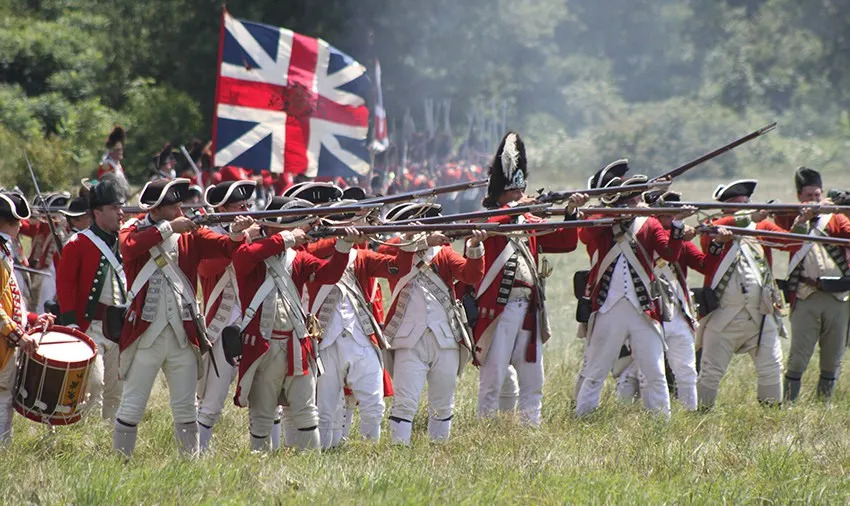
It’s brilliant, in a mathematically logical way. If the odds of something happening are low, you either increase the odds or increase the number of chances. Then it is from that “solved problem”, you start to see additional problems. From issues of manpower when defending against cavalry leading to the use of bayonets as a “solution”, to the invention of rifling allowing for far more accurate shots instead of just standing in a line shooting at each other with line infantry (although there were other reasons why line infantry fell out of favor), one could see a series of problem-solving giving birth to new problems, so on and so forth. This is simplifying a great deal, but for the sake of brevity, I won’t go any further.
I suppose, what I am trying to say is it wouldn’t make sense for Natalija to run around “testing” equipment that solves problems that wouldn’t have happened yet because she skipped several steps in the invention and iteration process. It’s like inventing a can opener before you invented canning (Historical fun facts with Rita: Canning was invented in 1809, but it wasn’t until 1855 when the can opener showed up)!
This entire historical discussion is to illustrate my design philosophy: we should look at the world, characters, and objects of a fantasy world through the eyes of those who live in it, not ours. The differing nature of their equipment tells a story of how their technology and culture developed, with the differences being an excellent tool to highlight the interesting aspects. In the case of Natalija, she wouldn’t be trying to invent a gun with rifling, but just use magic to swirl the bullet if it achieves the same effect. Then that, of course, would lead to a problem of magic being needed to use the gun itself, and then the gun would be improved from there. It is the limitation of various things that makes something far more interesting, rather than the perfect/efficient nature of it.
All that being said, however, I am still partial to the “rule of cool”. Whatever the design may be, I still consider what makes something awesome. It doesn’t matter if you are able to accurately depict something, but what’s important is maintaining the awesome factor, along with making it consistent with the world. Realism isn’t the key, consistency is. An audience is much more willing to suspend their disbelief if a design choice is consistent with the world that the creator has designed.
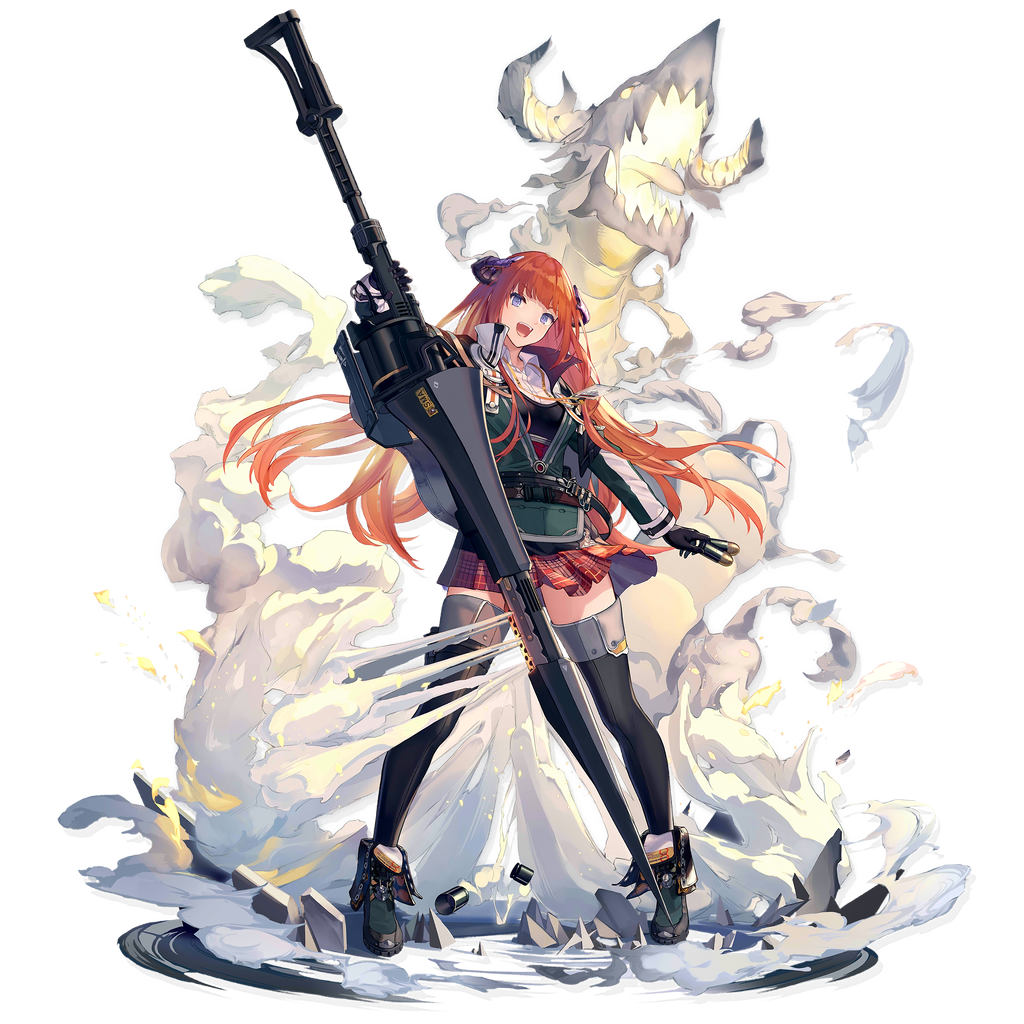
How does all that translate to Natalija’s design? Riifushi mentioned gun customization as part of a game mechanic, and that is one part of it. Natalija was unsure of what a gun should be, and wildly customizing and testing the result. It ought to create a sense of “Oh yeah, I understand why she would do this, even though it’s not the most efficient”.
These physical equipment, despite at first glance being just merely “gear” to look at, but in terms of visual design, it carries great meaning. They tell a story with their design, one of the user/inventor’s perspective and journey. It is a visual expression of a fraction of an entire world’s history and innovation. It can tell a story of how a character thinks, how they interact with the world, and perhaps even how a culture has shaped them based on the equipment they carry and the clothes they wear. All of that, without a single word directed at the player.
Background and Personality
One question remains on this issue’s affairs. Who is Natalija Ramonda? That question, I think, even Natalija herself has difficulty answering. She was born into a perfectly normal family, with perfectly healthy and loving parents. Formerly wealthy merchants, her parents had bought themselves into aristocracy and could be considered “nouveau riche”, or new money, those who had acquired great wealth in their lifetime as opposed to inheriting a family fortune. The nouveau riche, despite their supposed equal status, were sometimes looked down upon by old families of nobility, due to the perception of inferior stature that can only be afforded by blood and lineage.
This problem is further complicated considering Natalija’s parents, and by extension Natalija herself, are “Featureless”. Observant viewers of Riifushi’s video have noticed the other members of the playable party possess animal-like features (one of them has a pair of dog ears, and another has a tail of a certain marine animal). Natalija, however, is curiously lacking in any. She resembles far more humans of our world, and for that, she is commonly referred to as one of the “Featureless” in this fictional world. This aspect will be further expanded on in a future blog, but in general, the Featureless often do not belong to any given group or community due to their lack of shared traits, and they as a people have long wandered the continent as nomads. While the term Featureless can be considered a physical description, in this case, it is used to refer to a group of people.
Even among the Featureless themselves, they do not hold any particular kinship to one another, and could not be described as a distinctive group themselves, and are merely a fractured people. Some Featureless, like Natalija’s family, have settled in various countries, but they are noticeably different from the natives. Again, I have much to say about the Featureless, and perhaps some of you can immediately draw parallels and trace my inspiration, but I assure you, much will be expanded upon in their own dedicated blog. Unfortunately, we will have to hold onto our terrible excitement for a lecture on anthropology for another day.
Despite such a lineage, however, Natalija identifies deeply with the country she grew up in. She resembles far more a Sthlauenian than a Featureless in terms of her cultural habits and outlook, and perhaps even more so when compared to other Sthlauenians of her home city of Singidunum. Nevertheless, her Featureless status and being a “nouveau riche” causes Sthlauenian society to be hesitant in accepting her, despite her dedication to her country. That has shaped much of who Natalija is at the beginning of the game’s story.
When Natalija was first conceived as a character, she was a far darker character and much more one-dimensional, but I was rather dissatisfied with this. I believe a compelling character should be deeply complicated and nuanced. Even if Natalija is a character one finds to be distasteful and deplorable, in her current form she should still be someone who you could sympathize with. An individual who was shaped by her experiences in life, and perhaps under different circumstances, she would merely be a joyous girl enjoying life. The game, therefore, would be a journey with Natalija as the players slowly come to sympathize with someone who they first cast as “insane” or “evil”. Still, that isn’t to say Natalija is a good person or the hero of a story. A girl driven by obsession, and everything else, be it good or evil, is secondary to her. Instead, perhaps the player could understand her nature, but not approve of it. As they say, the road to hell is paved with good intentions. Natalija’s dearest wish was no doubt sincere and pure when it first took root in her heart, but now her ambition has been tainted with obsession.
“Obsession”. If there were a single keyword that could describe Natalija, it would be obsession. What drives her? What does she see with her lightless and unsmiling eyes? That’s something the player will discover gradually over the course of the game, and perhaps along that journey, the player will come to understand and sympathize with her. Make no mistake, Natalija is certainly not a good person, she would be the first to tell you that. However, what I wanted to portray with her is to have the player gradually sympathize with her struggle, but at the end of it all, realize in disgust that they would sympathize with someone capable of such horror.
What is her obsession, you ask? Well, that will have to be left for next time…
Despite all the things I’ve said of her, I consider her to be someone who does enjoy life to the fullest. To eat good food, to have a good time, to live a good life. It sounds contradictory to how I described her before, but that’s how I wanted to represent the two different Natalija outfits. I want the player to have a feeling of “Is this really Natalija?” when they first see her in a casual outfit. As the game progresses and as the players learn more about her, their thoughts would hopefully shift towards “This is so like Natalija”. It is to express that despite all her shortcomings and obsession, she still has an innocent side to her.
So, who is Natalija Ramonda? An unscrupulous merchant who cares not for morality? Or simply a girl who lives life to the fullest? She is both. That, I think, makes her perspective as a playable character interesting as the player navigates an unknown world.
Closing Remarks
That’s about all for this time’s blog. It by no means is a full overview of Natalija, and I would be glad to revisit her someday as she gets more fleshed out and as the blogs progress with other important information. Much has been removed from this blog regarding Natalija as it wouldn’t make sense without appropriate context, but hopefully, this will change as more blogs get added.
Speaking of which, is there any particular topic my dear readers would like to read about for the next post? I could do one on worldbuilding to flesh out the world, or simply discuss the “premise” of the story. The reason why the party set off on their journey, so to speak. Riifushi did mention something about a star falling from the sky, and I could perhaps expand on that. Other options are open as well. Do let me know your thoughts in the comments or just anything you wish to remark on regarding Natalija.
Thank you for reading. Until next time.
-Rita.
- Line infantry. Retrieved from Military History Now ↩︎
- Bagpipe from Arknights. Retrieved from Arknights Wiki ↩︎